01
Mechanical Engineering
Intake : 60


The Department of Mechanical Engineering was started in the year 2005 with an intake of 60. The department has been continuously producing graduates who are excelling in industries, entrepreneurship, and higher studies. The department has been implementing Outcome Based Education (OBE) with Continuous Quality Improvement (CQI) for the holistic development of the students, which is an essential model for any institute that aspires to be a leader in the field of education. The department takes pride in its well-qualified and trained faculty members and advanced laboratories for imparting hands-on skills to future technocrats.”
Intake : 60
To educate, prepare, inspire, and mentor students to excel as professionals and to grow throughout their careers in the art, science and responsibilities of engineering.
To be globally recognized as a center of excellence in providing mechanical engineering education leading to well qualified engineers with techno managerial skills.
The department implements Outcome Based Education (OBE) with Continuous Quality Improvement (CQI) for the holistic development of students and future technocrats.
Providing facilities and environment conducive to high quality value based education, well grounding students in fundamental principles of engineering.
The vision of the Department of Mechanical Engineering is to be globally recognized as a center of excellence in providing mechanical engineering education leading to well qualified engineers with techno managerial skills who are innovative, industry ready, successful in advanced studies & research and cater to the needs of the society.
The mission of the Department of Mechanical Engineering is to educate, prepare, inspire, and mentor students to excel as professionals and to grow throughout their careers in the art, science and responsibilities of engineering.
This is accomplished by:
Providing the facilities and environment conducive to a high quality value based education, well grounding the students in the fundamental principles of engineering and preparing them for diverse careers
Providing impetus to industry institute relation, to imbibe social, ethical, managerial and entrepreneurial values in students
Engaging in academic and scholarly activities, which strengthen the Department’s regional, national, and international reputation.
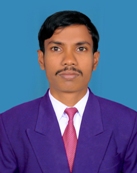
B.Tech, M.Tech, Ph.D, LMISTE
Associate Professor & Head of the Department
Department of Mechanical Engineering
Dr. Ramesh Babu Yeluri is the Associate Professor and Head of the Mechanical Engineering Department at Avanthi Institute of Engineering and Technology, Hyderabad, Telangana, India. He graduated in B.Tech (Mechanical Engineering) from JNTUH (SRREC) Hyderabad. He completed M.Tech (AMS) from JNTUH (PRRMEC). He received Doctor of Philosophy (Ph.D) in Mechanical Engineering in the area of Ultrasonic Metal Welding from SSSUTMS, Madhya Pradesh in 2021.
Dr. Ramesh Babu Yeluri is the Associate Professor and Head of the Mechanical Engineering Department at Avanthi Institute of Engineering and Technology, Hyderabad, Telangana, India. He graduated in B.Tech (Mechanical Engineering) from JNTUH (SRREC) Hyderabad. He completed M.Tech (AMS) from JNTUH (PRRMEC). He received Doctor of Philosophy (Ph.D) in Mechanical Engineering in the area of ultrasonic metal welding from SSSUTMS, Madhya Pradesh in 2021.
He is specialized in advanced manufacturing systems, automation, FMS, intelligent manufacturing systems and production technology. He is having 15 years of teaching experience in various engineering colleges. He has published 27 various publications in international / national journals and also presented papers in national / international conferences and he has 2 patents. He has 31 citations with 3 h-index and 01-i10-indexed in Google Scholar and 49 citations in ResearchGate with 2 h-index.
| MECHANICAL ENGINEERING | |||
| Branches | Name of the Courses | Seats | |
|---|---|---|---|
| B.Tech | Mechanical Engineering | 60 | |
Apply the knowledge of mathematics, science, engineering fundamentals, and an engineering specialization to the solution of complex engineering problems.
Identify, formulate, research literature, and analyze complex engineering problems reaching substantiated conclusions using first principles of mathematics, natural sciences, and engineering sciences.
Design solutions for complex engineering problems and design system components or processes that meet the specified needs with appropriate consideration for the public health and safety, and the cultural, societal, and environmental considerations.
Use research-based knowledge and research methods including design of experiments, analysis and interpretation of data, and synthesis of the information to provide valid conclusions.
Create, select, and apply appropriate techniques, resources, and modern engineering and IT tools including prediction and modeling to complex engineering activities with an understanding of the limitations.
Apply reasoning informed by the contextual knowledge to assess societal, health, safety, legal and cultural issues and the consequent responsibilities relevant to the professional engineering practice.
Understand the impact of the professional engineering solutions in societal and environmental contexts, and demonstrate the knowledge of, and need for sustainable development.
Apply ethical principles and commit to professional ethics and responsibilities and norms of the engineering practice.
Function effectively as an individual, and as a member or leader in diverse teams, and in multidisciplinary settings.
Communicate effectively on complex engineering activities with the engineering community and with society at large, such as, being able to comprehend and write effective reports and design documentation, make effective presentations, and give and receive clear instructions.
Demonstrate knowledge and understanding of the engineering and management principles and apply these to one’s own work, as a member and leader in a team, to manage projects and in multidisciplinary environments.
Recognize the need for, and have the preparation and ability to engage in independent and life-long learning in the broadest context of technological change.
Mechanical Engineering I & II SEM Course Outcomes For R22 regulation
| S.NO | Year/Sem | Course Name | Course Outcomes |
|---|---|---|---|
| 1 | II-I | Probability, Statistics & Complex Variables | CO1: Formulate and solve problems involving random variables and apply statistical methods for analyzing experimental data. |
| CO2: Apply concept of estimation and testing of hypothesis to case studies. | |||
| CO3: Analyze the complex function with reference to their analyticity, integration using Cauchy’s integral and residue theorems | |||
| CO4: Taylor’s and Laurent’s series expansions of complex function. | |||
| 2 | II-I | Mechanics of Solids | CO1: Analyze the behavior of the solid bodies subjected to various types of Loading |
| CO2: Apply knowledge of materials and structural elements to the analysis of simple structures methods | |||
| CO4: Analyze and interpret laboratory data relating to behavior of structures and the materials | |||
| CO5: are made of, and undertake associated laboratory work individually and in teams. Expectation and capacity to undertake lifelong learning | |||
| 3 | II-I | Metallurgy & Material Science | CO1: Memorize the types of Crystal structures and their defects. |
| CO2: Learn the necessity of alloying and identify types of alloy phases properties. | |||
| CO4: Apply the knowledge of heat treatment to enhance surface properties. | |||
| CO5: Analyze the properties and micro structure of ferrous and non-ferrous alloys | |||
| CO6: Develop new materials and enhance properties for the advanced applications. | |||
| 4 | II-I | Production Technology | CO1: Understand the idea for selecting materials for patterns |
| CO2: Know Types and allowances of patterns used in casting and analyze the components. | |||
| CO3: moulds. Design core, core print and gating system in metal casting processes | |||
| CO4: Understand the arc, gas, solid state and resistance welding processes | |||
| CO5: Develop process-maps for metal forming processes using plasticity principles | |||
| 5 | II-I | ThermoDynamics | CO1: Analyze the work and heat interactions associated with a prescribed process path |
| CO2: Criticize a different operations on steady flow energy equation | |||
| CO3: Define the fundamentals of the first and second laws of thermodynamics and explain their significance to a wide range of systems. | |||
| CO4: Evaluate entropy changes in a wide range of processes and determine the reversibility or irreversibility of a process from such calculations. |
Note: Complete Course Outcomes table (all original rows for II-I, II-II, III-I, III-II etc.) is preserved exactly from the source mechanical.php.
Information on PEOs, POs and COs for postgraduate programs will be updated soon.
Academic details and related information will be updated shortly.
| S.No | Faculty Name | Course |
|---|---|---|
| 01 | DR RAMESH BABU YELURI | MECH |
| 02 | SHANKAR ACHINI | MECH |
| 03 | HARINAYAK VANKUDOTHU | MECH |
| 04 | SRIVENI KORRA | MECH OTHERS |
| 05 | SWATHI ANNE | MECH |
| 06 | SANGEPU SURENDAR BABU | MECH |
| 07 | VUNDAKODE VAMSHI KRISHNA | MECH OTHERS |
| 08 | KOPPULA VIJAY KUMAR | MECH OTHERS |
| 09 | MOHAN LAL KATIKE | MECH OTHERS |
| 10 | DR D DEV SINGH | MECH OTHERS |
| 11 | DUGGU VINAY KUMAR | MECH OTHERS |
| 12 | DR P H V SESHA TALPA SAI | ME |
| 13 | AMBIGALLA REEMA | MECH |
| 14 | DR K.V.P. CHAKRADHAR | MECH |
| 15 | BANOTH HARIKRISHNA | MECH |
Faculty achievements and recognitions will be updated soon.
Student achievements, awards and recognitions will be updated soon.
Details of internships and industrial visits will be updated soon.
Details of department academic toppers will be updated soon.
Department placement details and achievements will be updated soon.
Department activities and event details will be updated soon.
Alumni details and activities will be updated soon.
Department photos and event highlights will be added soon.
The department’s goals and objectives will be updated shortly.
Department documents and resources will be available for download soon.