01
Electronics & Communication Engineering
Intake : 120


The Department of ELECTRONICS & COMMUNICATION ENGINEERING started right from the inception of the college in the year 2005 with a vision of imparting high quality education to suit the global standards in Electronics & Communication Engineering. The student intake in the year 2005 was 60 which has been increased to 120 in the Academic year 2007-2008.
The department also offers a Post Graduate course in VLSI System Design started in the year 2011 with an intake of 18.
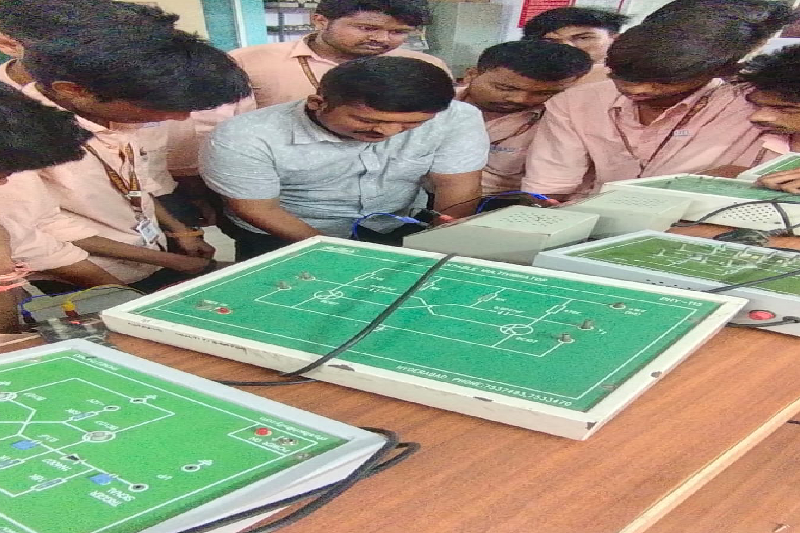
The students are encouraged to participate in workshops, industrial internship, industrial visits and seminars; along with the projects assigned during the course, these activities enable them to broaden their outlook and build in professionalism that makes their transition from college to industry smoother after graduation.”
Intake : 120
Intake : 18
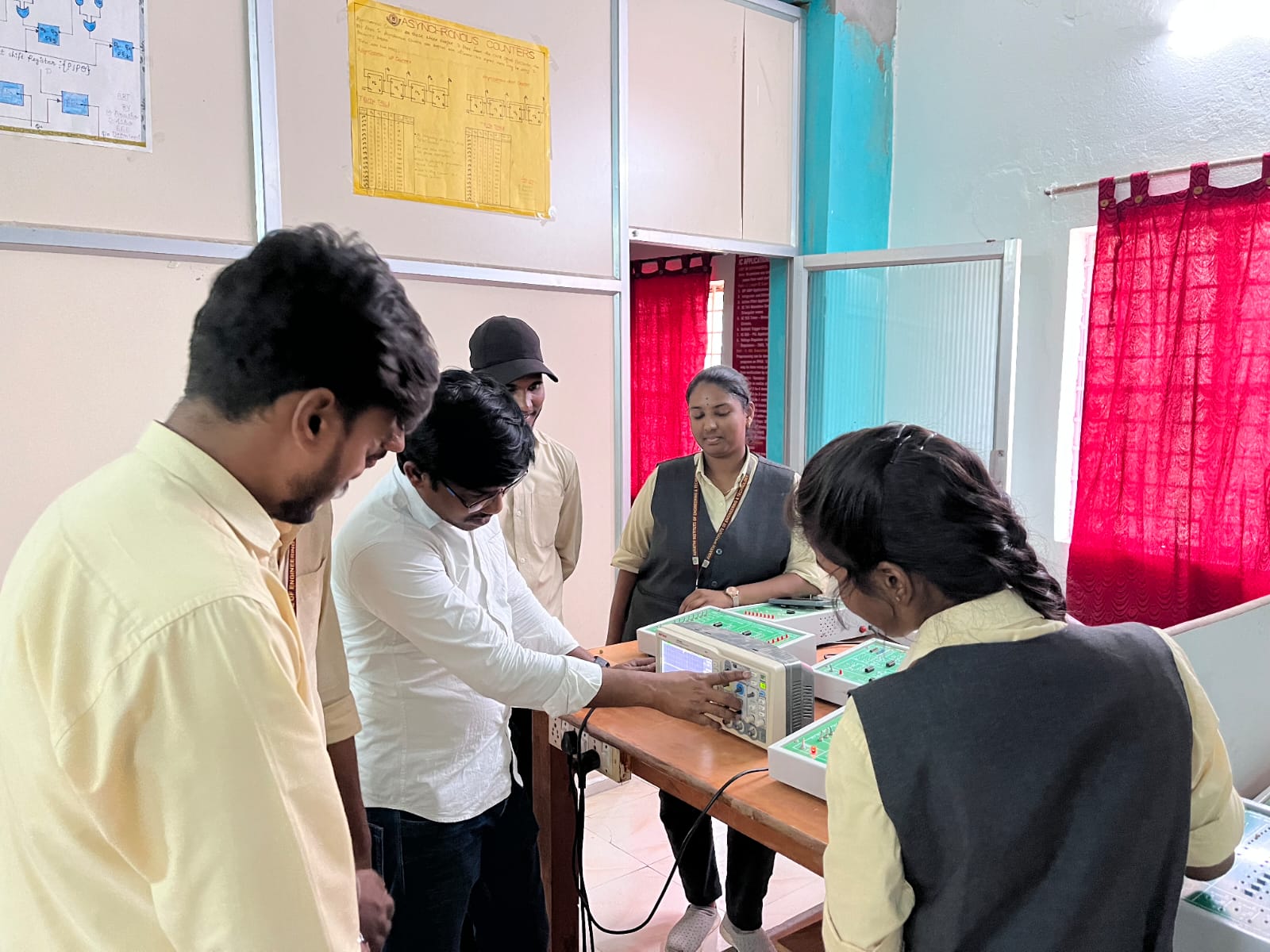
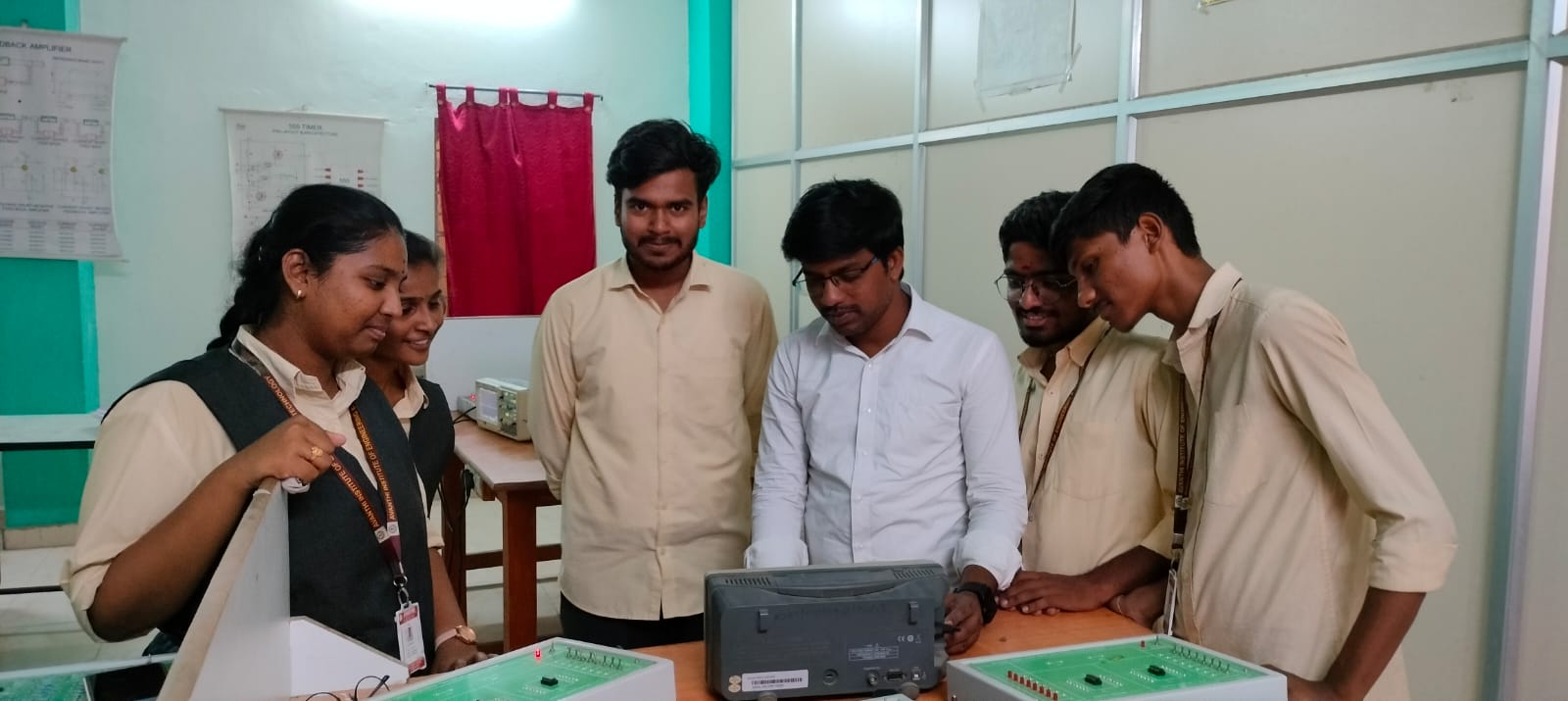
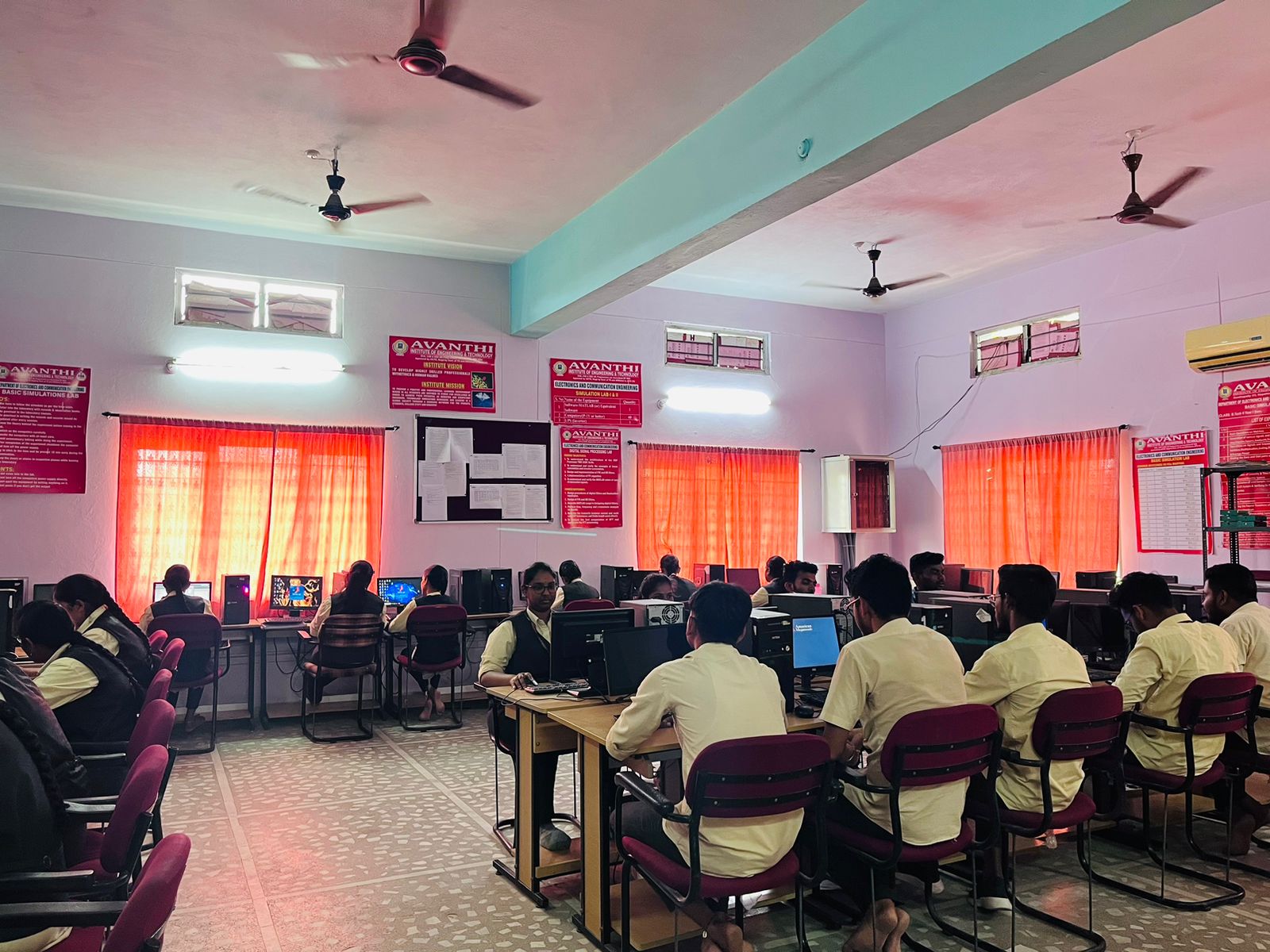
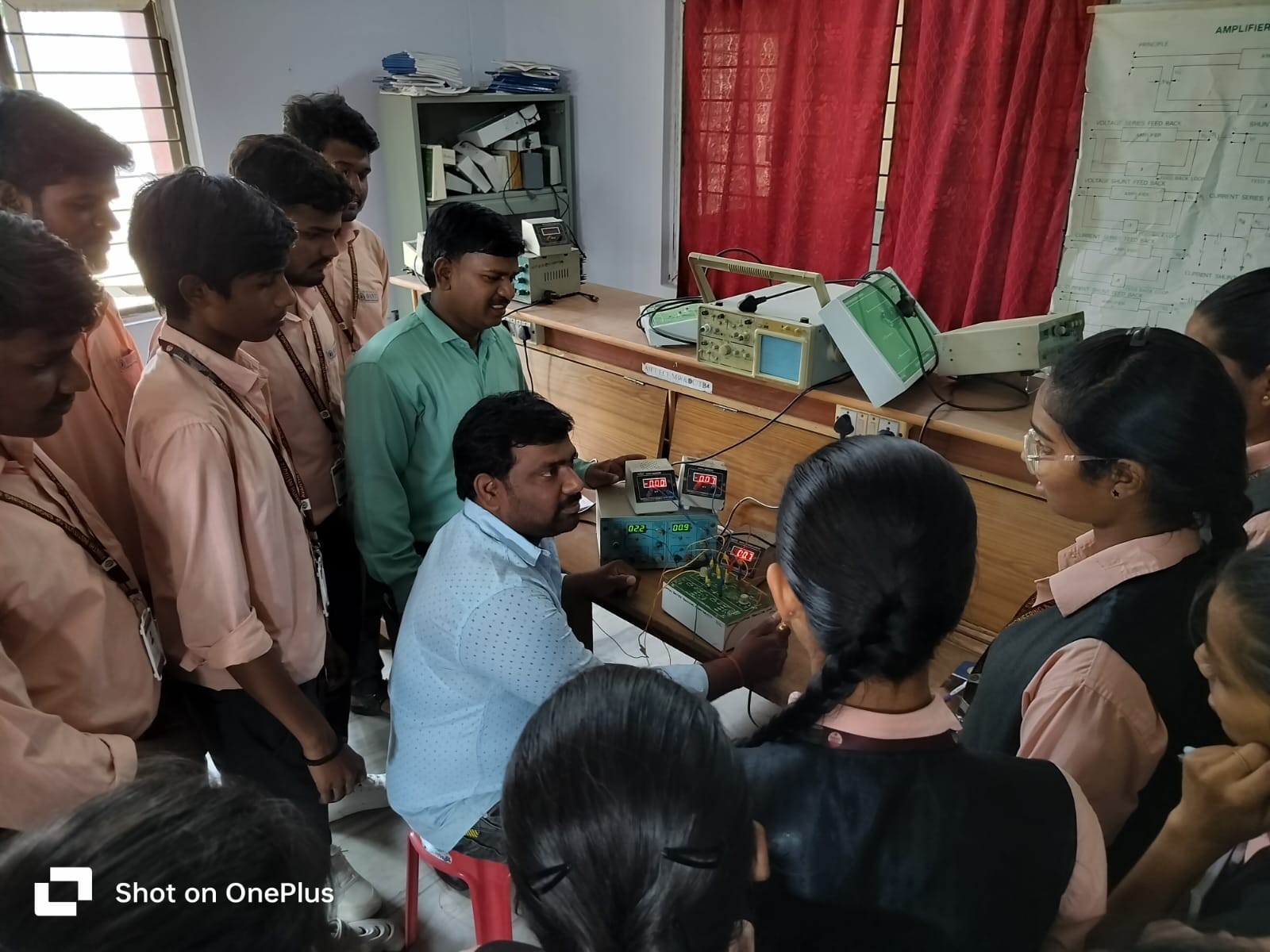
The department also offers a Post Graduate course in VLSI System Design started in the year 2011 with an intake of 18. The department provides state-of-the-art laboratories and committed faculty who keep abreast of upcoming technologies through continuous participation in seminars, workshops and advanced courses.
To impart high quality in Electronics and communication engineering education through innovative teaching learning processes in order to Maximize knowledge transfer.
To become a center of excellence and to produce high quality, self motivated, creative and ethical engineering and technologists, contributing effectively to Electronics and Communication Engineering.
To carry out high quality research leading to the creation and commercialization of intellectual property.
To inculcate team work, imbibe leadership qualities, professional ethics and social responsibilities in students.
To become a center of excellence and to produce high quality, self motivated, creative and ethical engineering and technologists, contributing effectively to Electronics and Communication Engineering.
To impart high quality in Electronics and communication engineering education through innovative teaching learning processes in order to Maximize knowledge transfer.
To facilitate graduates define, design, and solve engineering problems in the field of Electronics and communication Engineering using various Electronic design automation (EDA) tools.
To carry out high quality research leading to the creation and commercialization of intellectual property.
To inculcate team work, imbibe leadership qualities, professional ethics and social responsibilities in students.

M-Tech, Ph.D., MIAENG, MIACSIT, MISMTE, LMISTE, SMIACSIT
Vice Principal & Head of the Department
Department of Electronics and Communication Engineering
Dr. S Kishore Reddy is currently working as Vice Principal & HOD, Associate professor, Electronics & Communication Engineering, Avanthi Institute of Engineering & Technology, Telangana, and Hyderabad, India. He is having totally 19 years of teaching experience including 07 years international experience. His main research includes VLSI design and wireless communications. He has published 05 books and 53 papers in reputed national & international Journals. He has participated in different national & international conferences. He designed and published 02 Indian patents, holds chief Editorial Board membership in 2 international journals, received best Project coordinator awards from IETE and KYIE, and is Editorial Board member of 140 international journals. He holds life memberships of MIAENG, MIACSIT, MISMTE, LMISTE, SMIACSIT, MIAENG, MAIRCC, SMUACEE, MICE, MSDIWC, MIIRJC.
| ELECTRONICS & COMMUNICATION ENGINEERING | ||
| Branches | Name of the Courses | Seats |
|---|---|---|
| B.Tech | Electronics & Communication Engineering | 120 |
| M.Tech | VLSI System Design | 18 |
Apply the knowledge of mathematics, science, engineering fundamentals, and an engineering specialization to the solution of complex engineering problems.
Identify, formulate, research literature, and analyze complex engineering problems reaching substantiated conclusions using first principles of mathematics, natural sciences, and engineering sciences.
Design solutions for complex engineering problems and design system components or processes that meet the specified needs with appropriate consideration for public health and safety, cultural, societal, and environmental considerations.
Use research-based knowledge and research methods including design of experiments, analysis and interpretation of data, and synthesis of information to provide valid conclusions.
Create, select, and apply appropriate techniques, resources, and modern engineering and IT tools including prediction and modeling to complex engineering activities with an understanding of the limitations.
Apply reasoning informed by contextual knowledge to assess societal, health, safety, legal and cultural issues and consequent responsibilities relevant to professional engineering practice.
Understand the impact of professional engineering solutions in societal and environmental contexts, and demonstrate the knowledge of and need for sustainable development.
Apply ethical principles and commit to professional ethics and responsibilities and norms of engineering practice.
Function effectively as an individual, and as a member or leader in diverse teams and multidisciplinary settings.
Communicate effectively on complex engineering activities with the engineering community and society at large through effective reports, documentation, presentations and clear instructions.
Demonstrate knowledge and understanding of engineering and management principles and apply these to one’s own work as a member and leader in a team.
Recognize the need for and have the preparation and ability to engage in independent and life-long learning in the broadest context of technological change.
The Electronics and Communication Engineering Graduates will be able to:
| S.No | Faculty Name | Course |
|---|---|---|
| 01 | Dr KISHORE REDDY SHILAPUREDDY | ECE |
| 02 | Dr VANKAYALAPATI NAGARAJU | M TECH VLSI |
| 03 | SRINIVAS GANUGUNTLA | ECE |
| 04 | SURYAPRAKASH DUSARI | M TECH VLSI |
| 05 | SAGAR SABBINENI | ECE |
| 06 | BASHIPAKA VENKATESHWARLU | ECE |
| 07 | NAGESH ERUGU | ECE |
| 08 | KOTTA SHILPA | ECE |
| 09 | SONY KANDA | ECE |
| 10 | BHANOTHA DASHARADHA | ECE |
| 11 | VASANTHA NAGARAJU | ECE |
| 12 | JALADI MERINA | ECE |
| 13 | RAJITHA ELAGONDA | ECE |
| 14 | MANVITHA DAVU | ECE |
| 15 | SHAIK ASIFA | ECE |
| 16 | POTHAGALLA SYAMALA | OTHERS ECE |
| 17 | ANAGANTI PRAKASH REDDY | ECE |
| 18 | LAKSHMI SOWJANYA DEVI SABBELLA | ECE |
| 19 | PADABAKKALA PAVAN KUMAR | ECE |
| 20 | THADOJU SHWETHA | OTHERS ECE |
| 21 | P V RAJU | ECE |
| 22 | Dr CHANDRASHEKAR GURRALA | M TECH VLSI |





Information on PEOs, POs and COs for postgraduate programs will be updated soon.
Academic details and related information will be updated shortly.
Faculty achievements and recognitions will be updated soon.
Details of internships and industrial visits will be updated soon.
Details of department academic toppers will be updated soon.
Department placement details and achievements will be updated soon.
Alumni details and activities will be updated soon.
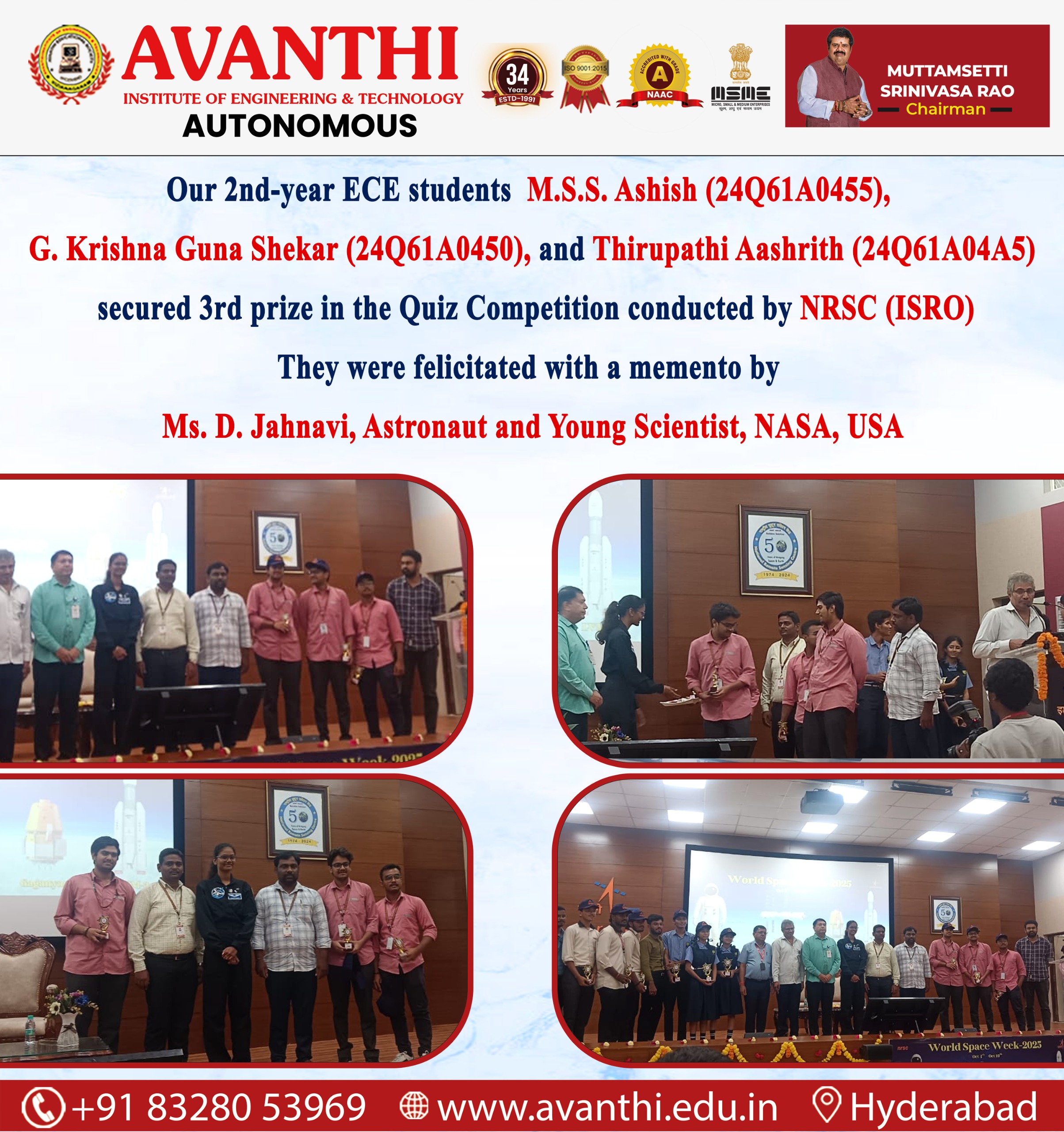
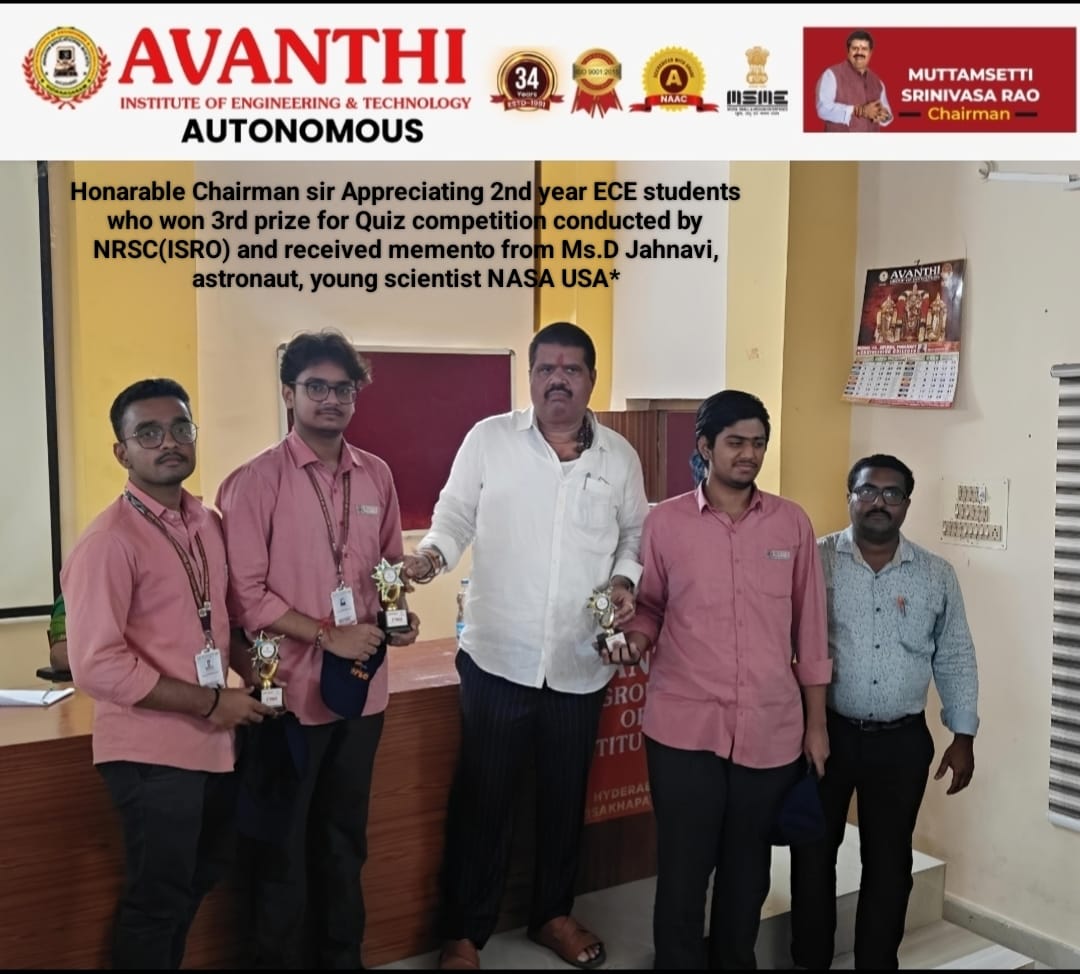
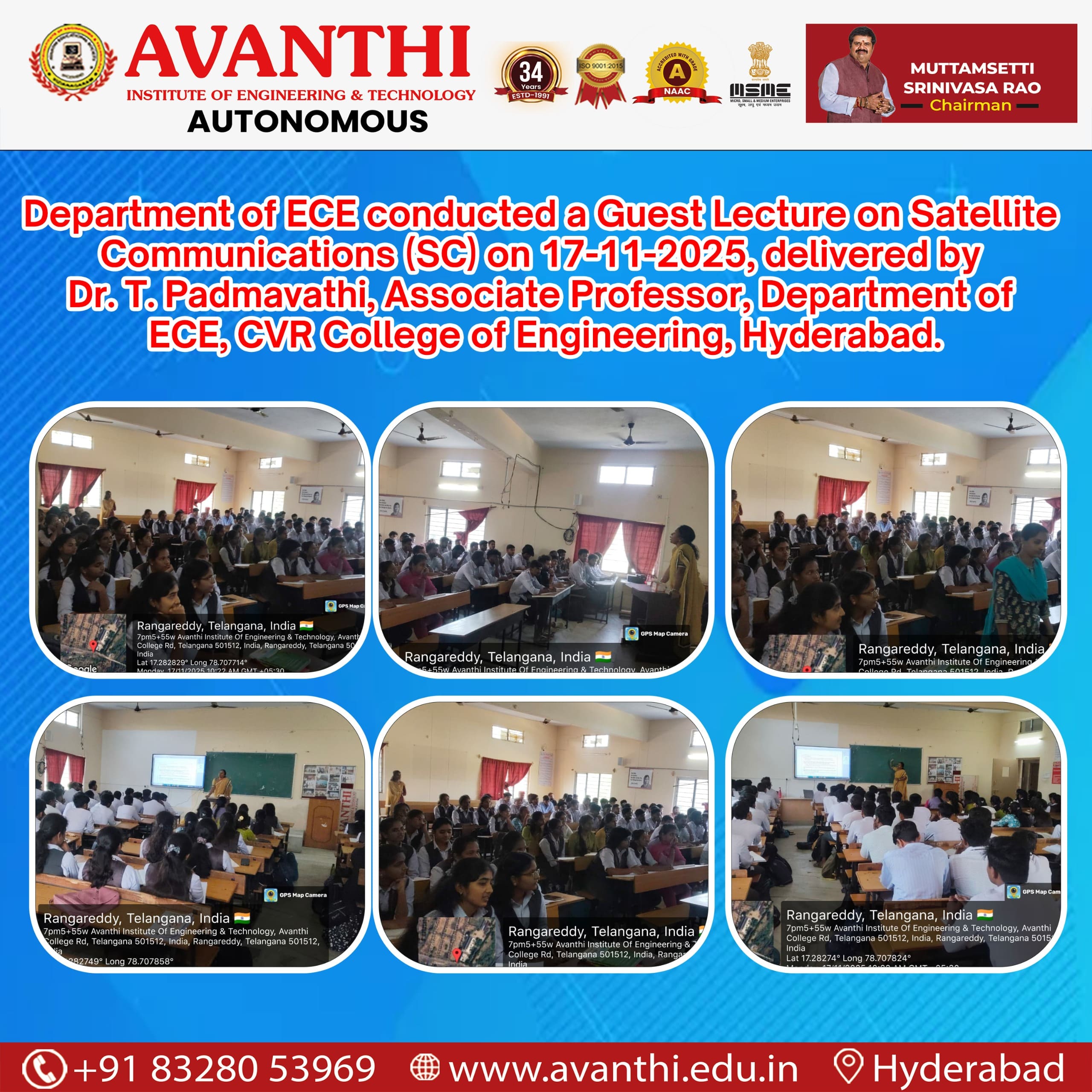
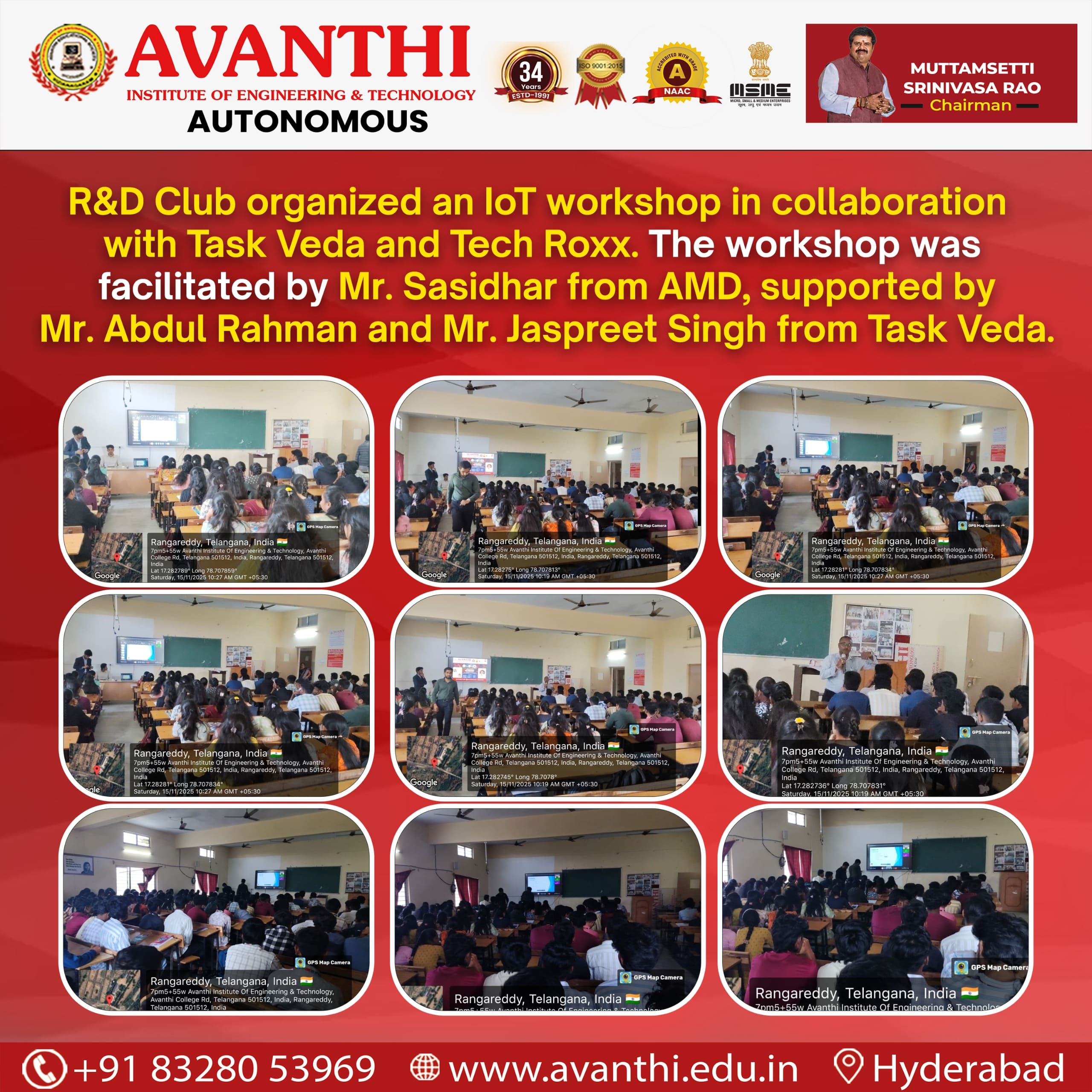
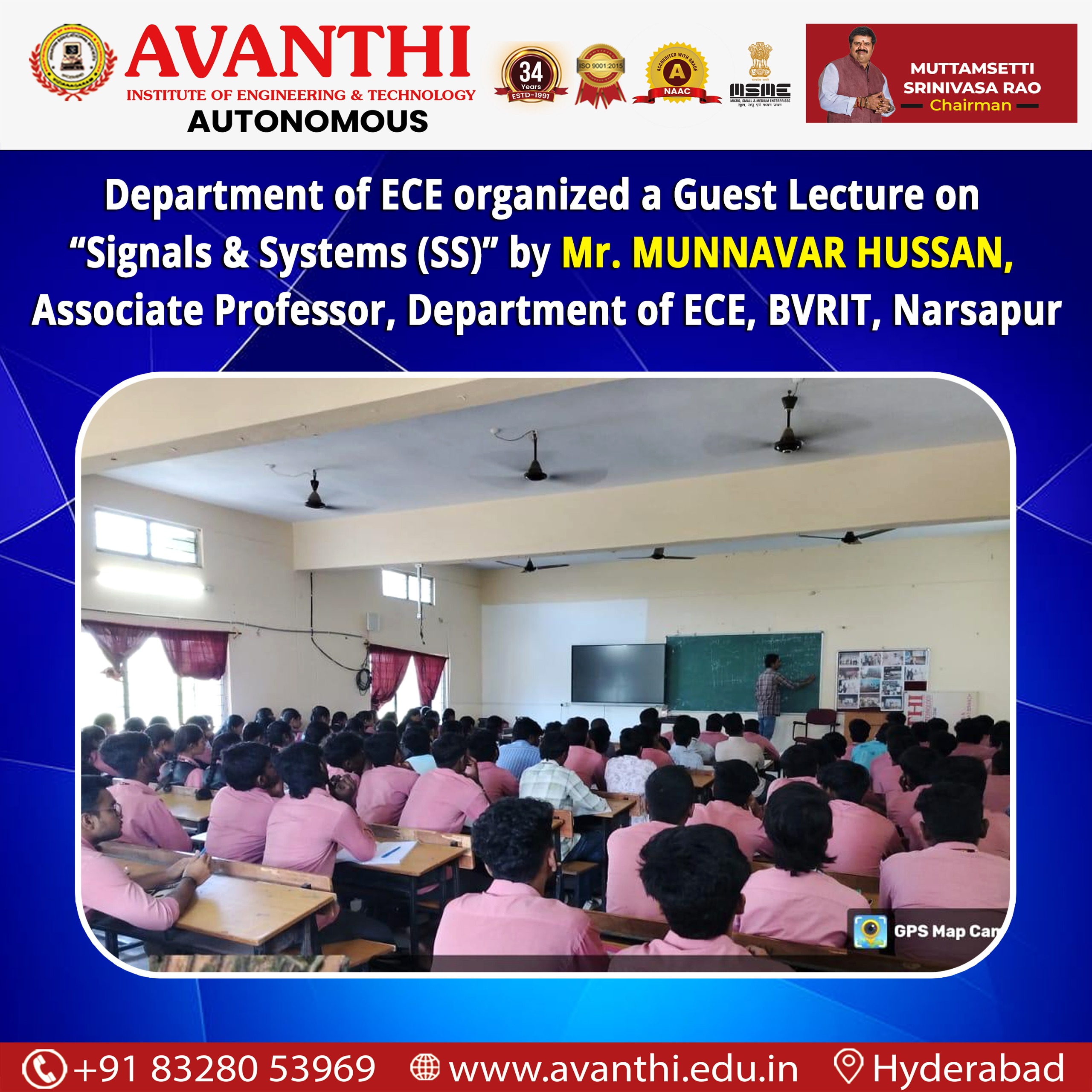
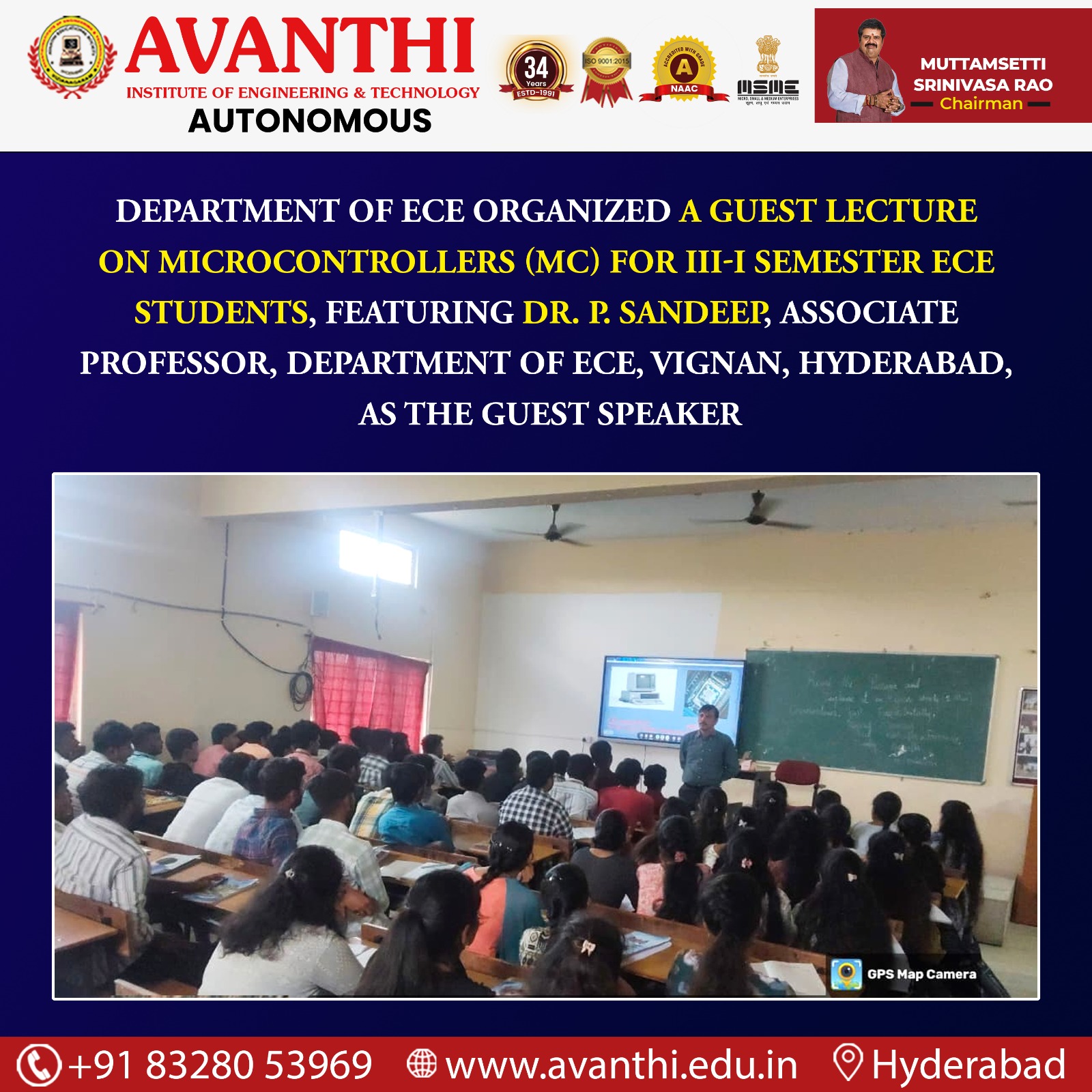
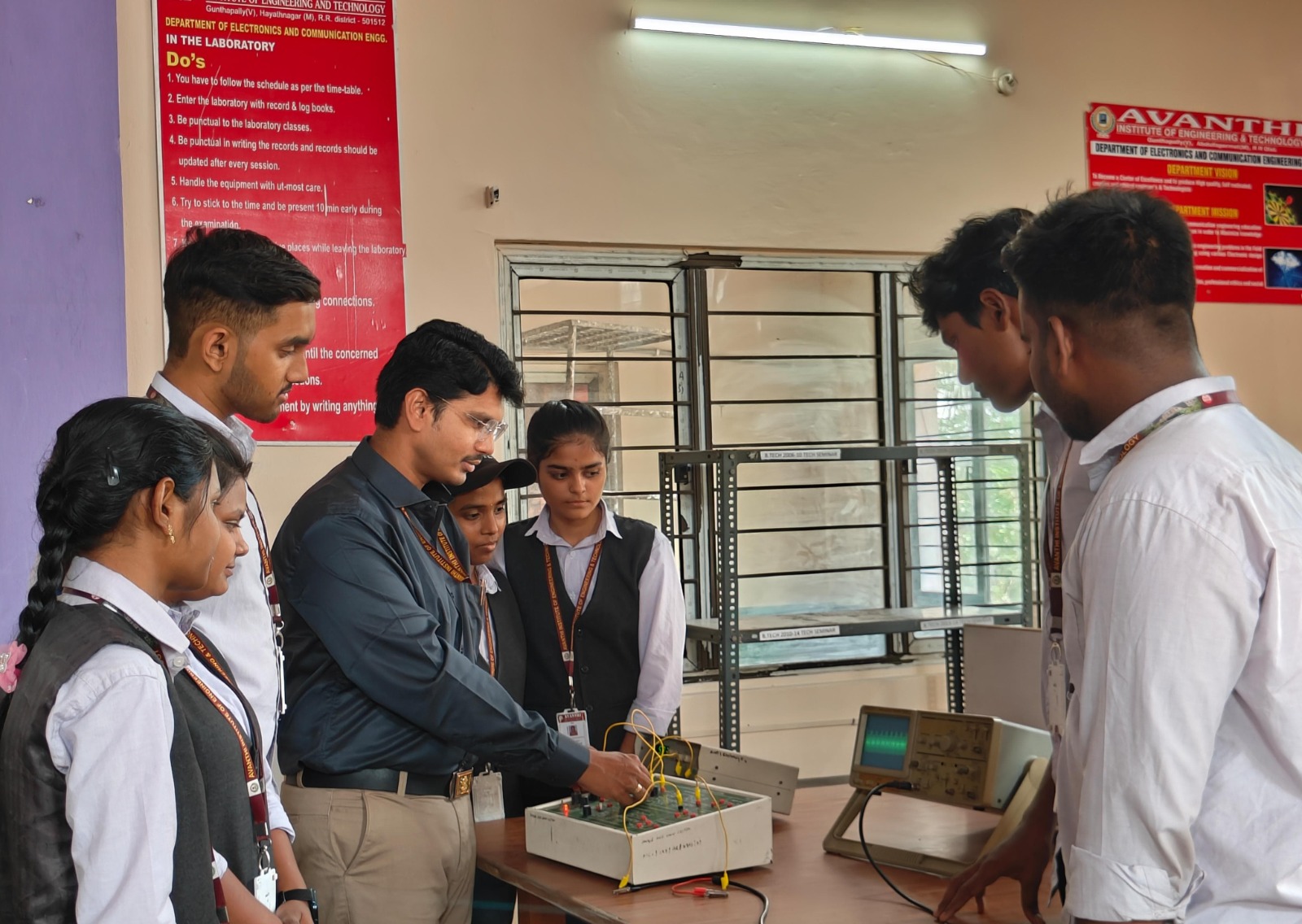
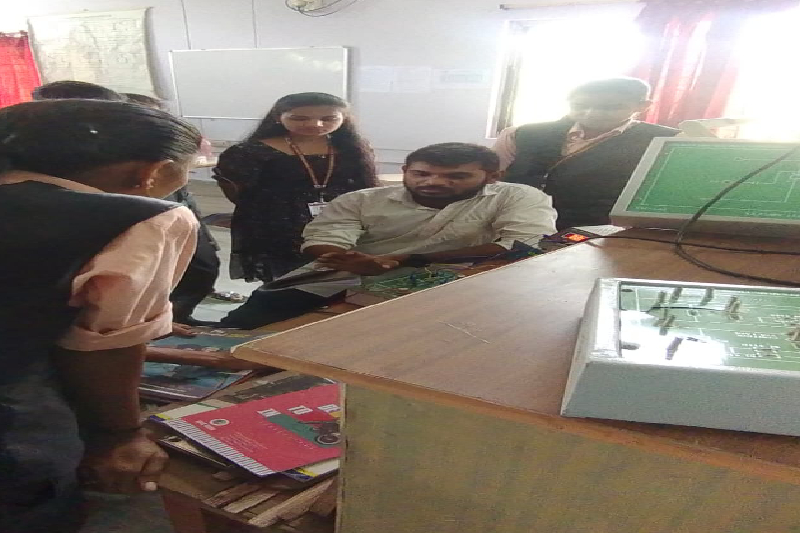
Department photos and event highlights will be added soon.